
If you are looking for commercial land for sale in Austin, Texas,
the process is far more complex than simply finding an empty lot.
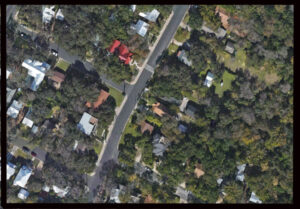
Between strict city ordinances, varying county regulations, and the unique topography of Central Texas, buying land requires rigorous due diligence.
1. Analyze the True Cost and ROI
First and foremost, what is the actual cost of the land relative to your development budget? For instance, if you pay $1,000,000 for 10 acres to build a retail center, does that cost leave room for a profitable project, or does a $500,000 acquisition represent your true ceiling?
Comparables: Always ensure you are “buying right” by evaluating recent sales of comparable commercial land in the immediate Austin submarket.
Property Taxes: Furthermore, Travis and Williamson County property taxes represent an ongoing, significant obligation. Consequently, you must ensure the projected annual taxes fit smoothly into your long-term operating budget.
2. Determine the Governing Jurisdiction (City vs. ETJ vs. County)
Second, the governing jurisdiction dictates exactly which rules, permitting processes, and development regulations you must follow. For example, does the Austin City Limits encompass the property? Alternatively, does the parcel sit in the Extra Territorial Jurisdiction (ETJ)? Or does the county (e.g., Travis, Williamson, or Hays) exclusively govern the land? Ultimately, developing in the ETJ or the county differs vastly—and sometimes offers distinct advantages—compared to building inside the city limits.
3. Verify Austin Zoning Categories
Next, if the property sits inside the city limits, what zoning category does the city assign to it? Austin zoning strictly dictates the exact land uses you can execute on the property. Consequently, if a property lacks the correct zoning for your intended use, requesting a zoning change will add significant time and cost to your project. Furthermore, the city council never guarantees approval for zoning change requests.
4. Check for Deed Restrictions
In addition to municipal zoning, deed restrictions serve as private agreements attached to the land’s deed that restrict your use of the real estate. Importantly, these apply regardless of how local authorities zone the property (commercial or residential) and act in addition to local, state, and federal rules. Often, you will find that deed restrictions act far more restrictively than the city’s governing zoning laws.
5. Evaluate Location and Traffic Flow
Moreover, does the site’s location naturally support your intended use?
Retail/C-Stores: Specifically, does a high-traffic arterial road host the site? Additionally, does the property sit on the “going home” side of the street to capture easy commuter access?
Surrounding Properties: Likewise, you must evaluate the adjacent lots. Will the neighboring businesses diminish your property value, or does your intended use conflict with theirs (e.g., constructing luxury townhomes next to a bustling industrial park)?
6. Confirm Utility Access (Water, Wastewater, Power)
Crucially, you must assess utility access, which includes water, wastewater, electricity, natural gas, and telecommunications. In Austin, water and wastewater typically represent the most critical and expensive utilities you will extend to a vacant property. If you cannot access city utilities, you can explore workarounds like drilling a well or installing a commercial septic system, particularly in the Hill Country. However, these solutions require ongoing maintenance, demand TCEQ compliance, and carry a limited lifespan.
7. Assess Topography and Site Prep Costs
Furthermore, Central Texas geography varies wildly, ranging from the flatlands of East Austin to the rocky slopes of the Hill Country. Naturally, a steeper slope increases your development costs because your construction team must execute extensive cutting, filling, and retaining wall construction. While developers generally prefer flat land for commercial builds to keep costs down, a hillside location might provide a premium view for an office or hospitality project.
8. Identify Easements
Additionally, an easement grants another party the legal right to use your land for a specific purpose. Therefore, you must identify any easements on the property that might restrict your buildable area. Common examples include public utility easements (which allow providers to install and maintain lines) or access easements (which permit a neighboring property owner to cross your land to reach a roadway).
9. Check the Floodplain Maps
Importantly, locals often refer to Central Texas as “Flash Flood Alley.” Consequently, you must determine if a FEMA-designated floodplain covers any portion of the property. If it does, the floodplain severely reduces your buildable or developable area, which in turn diminishes the overall value and utility of the land.
10. Evaluate Roadway Access and Curb Cuts
Next, does the property feature direct roadway access? If so, does the site already include an existing driveway and curb cut? If it lacks these features, you will need to apply for permits (sometimes through TxDOT if a state highway borders the property) and construct them yourself. Furthermore, close proximity to existing driveways or intersections can sometimes prevent the city or state from approving your curb cut permit.
11. Conduct a Thorough Title Search for Liens
Finally, a lien acts as an encumbrance on a property that a creditor uses to secure a debt. Before purchasing, your broker and title company must determine if any outstanding liens burden the property. As a best practice, always require the seller to clear any liens prior to closing, because you can much more easily leverage a release before you transfer the funds.
- The Golden Rule of Buying Land: > Always ask yourself one basic question before purchasing: “Why is this property vacant, and why hasn’t someone built on it already?”
- Looking to buy commercial land in Austin? Navigating these 11 steps requires local expertise.
- Contact Mark Pustka Today to ensure your next land acquisition is a profitable one.