
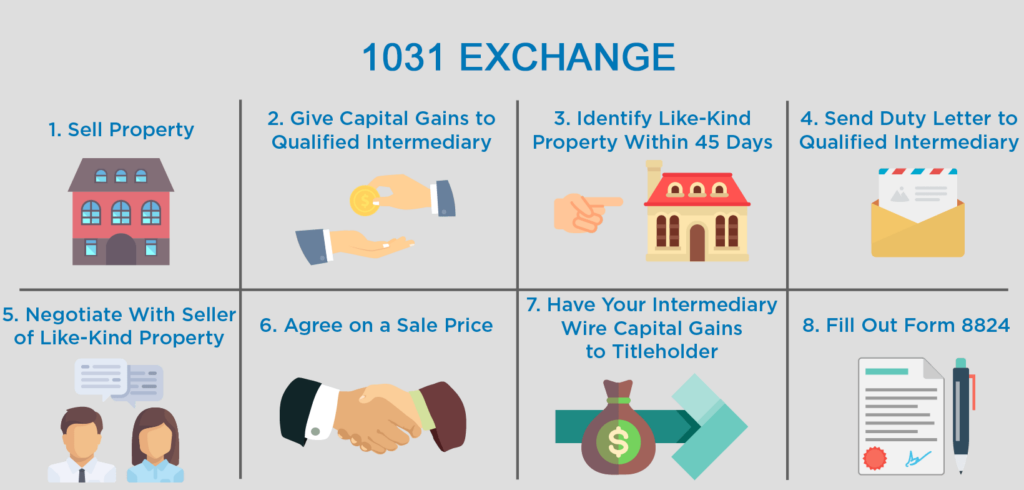
A 1031 tax-deferred exchange in Austin allows property owners to preserve their full investment value. This strategy works in Austin and across the United States. Specifically, this transaction lets owners sell an investment property without paying immediate capital gains taxes. Investors achieve this by strategically reinvesting their sales proceeds into a new, qualifying property.
You can exchange almost any real property. However, you must have held the relinquished asset previously for investment purposes. Personal residences, for example, typically do not qualify.
THE RULES OF A 1031 EXCHANGE
Like Kind Property Requirements
The replacement property must be “like kind” to the relinquished property. However, “like kind” does not mean exactly the same. The IRS considers almost any real property “like kind” to other real property. For example, you can exchange a single-family rental home for a warehouse or office building.
equal Property Value
As a general rule, the property you acquire must meet certain financial thresholds. It must have both value and equity equal to or greater than the relinquished property.
45 Day Identification Period
You must identify your new property within 45 days of closing on your old property. The IRS provides three specific property identification rules:
Three (3) Property Rule: You may identify up to three properties, regardless of their total value.
200 Percent Rule: You can identify any number of properties. Their combined fair market value cannot exceed twice the value of the relinquished property.
95 Percent Rule: You can identify any number of properties regardless of total value. However, you must successfully acquire 95% of that combined value.
180 Day Exchange Period
You must complete the new property acquisition within 180 days of transferring your old property. Alternatively, you must close by the tax return filing date for the transfer year. You must meet whichever deadline comes first. You must strictly follow these time restrictions to satisfy the IRS. The IRS does not grant extensions.
STEPS FOR A SUCCESSFUL 1031 EXCHANGE
The Purchase Contract
The Buyer and Seller execute a contract to purchase the relinquished property. This purchase contract should contain a specific “cooperation clause.” In this clause, the Buyer agrees to help the Seller structure a 1031 exchange. Next, the Seller assigns their contract rights to a Qualified Intermediary (QI).
Opening the Exchange
You will typically set up the exchange with the QI after opening escrow. Next, your team prepares the necessary documentation. The Exchange Agreement clearly defines the transaction details. It also sets forth the obligations of both the taxpayer and the QI. Finally, you draft an assignment of the purchase contract. This document transfers your rights as the Seller directly to the QI.
Closing the Relinquished Property
The old property closes when all parties meet the conditions of sale. The title company then conveys the property to the Buyer. This conveyance represents a transfer from the Seller to the QI. The QI holds this value to exchange for a future property. The title company delivers the sales proceeds directly to the QI. The Seller must never take actual or constructive receipt of the cash proceeds.
Identifying the replacement property
Next, you must prepare the contract assignment for your new replacement property. Furthermore, the Buyer and Seller must execute a Release and Warranty. Finally, you should prepare formal instructions for the settlement agent. These instructions outline the specific documentation required to complete the exchange.
Closing the replacement property
Eventually, all parties will meet the closing conditions. The QI then delivers the held funds to the settlement agent. These funds acquire the replacement property. The Seller conveys the new property directly to the Buyer. This final closing must occur within the strict 180-day window.
Need Help Executing Your 1031 Exchange?
Executing a 1031 exchange requires precision and strict adherence to timelines. It also demands a deep understanding of the local market. The IRS will disqualify the exchange if you miss a deadline. Improperly identifying a property will also trigger a massive tax penalty. You can review the exact IRS Code Section 1031 guidelines online.
Perhaps you are preparing to sell an investment property soon. You need an experienced broker to identify suitable replacement properties quickly. Please contact me today to to discuss your portfolio. Let’s start planning your next commercial acquisition.olio and start planning your next acquisition.